

 Sep 16, 2026

 Jul 10, 2026
 Riddhi Mevada
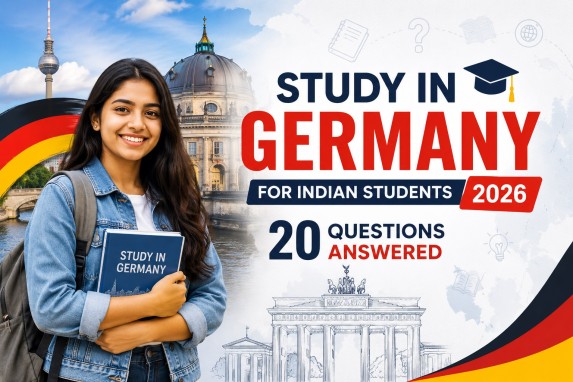
Over 42,000 Indian students studied in Germany in the 2024–25 academic year — making India the largest source of international students in Germany. The reason is straightforward: world-class engineering and science universities, zero tuition at public institutions, full Schengen access, and an 18-month post-study work visa that leads directly to one of Europe’s fastest PR pathways.
But the Germany student visa process has unique steps that catch many Indian students off guard — particularly the blocked account, the APS certificate, and the new Consular Services Portal (CSP) that became mandatory in 2025. Below are the 20 most searched questions from Indian students, answered honestly and accurately as of July 2026.
→ See also: Study in Poland for Indian Students 2026
→ See also: Study in Cyprus for Indian Students 2026
Yes — especially if your goal is engineering, IT, data science, automotive, or environmental studies. Germany offers:
The honest trade-off: Germany requires the APS certificate (unique to Indian students), a blocked account of €11,904, and many top programs are in German. The preparation timeline is 6–8 months, longer than the UK or Canada. But for those who plan ahead, the financial savings are enormous — zero tuition versus Rs 30–50 lakh in the UK.
Yes — at most public universities. You pay only a semester contribution of €150 to €350 (approximately Rs 13,000–Rs 32,000), which almost always includes a city-wide public transport pass.
Two exceptions to know:
If zero tuition is your reason for choosing Germany, apply to public universities outside Baden-Württemberg — universities in Berlin, Munich (except LMU’s specific programs), Hamburg, Dresden, Cologne, and most other states charge zero tuition.
The required amount is €11,904 (approximately Rs 10.8 lakh). This is €992 per month for 12 months. After arriving in Germany and activating your account, you receive €992 per month in instalments.
This is your own money — not a fee. It is returned to you monthly. The purpose is to demonstrate to the German Embassy that you have 12 months of living expenses available before you arrive.
Important: Many online articles still cite the old 2023 figure of €11,208. The correct 2026 figure is €11,904. Submitting the old amount will result in rejection.
Transfer the full €11,904 in one wire transfer. Multiple smaller transfers create a fragmented statement that raises questions. Allow 4–6 weeks from opening to receiving your Sperrbestätigung (blocking confirmation letter). Do not book your VFS appointment before this letter arrives — it is a mandatory document.
Yes — in two specific situations:
For most Indian students, the blocked account is the practical choice — straightforward, transparent, and accepted without question when correctly documented.
APS (Akademische Prüfstelle) is the German government-authorized Academic Evaluation Centre in New Delhi. It verifies the authenticity of your Indian academic documents before the German Embassy processes your visa.
The APS certificate is 100% mandatory for all Indian students. The German Embassy will not open your visa file without it. No exceptions.
Once issued, the APS certificate is valid indefinitely — you do not need to renew it for future applications.
→ See also: Student visa assistance at Volumaax
Start your APS application before anything else. Before university applications. Before your blocked account. Before your SOP. Everything depends on having this certificate. Students who delay APS lose entire semester intakes.
Total timeline: 6 to 8 months from start to visa in hand. Start your APS at least 6 months before your intake date. For October 2026 intake, you should have started already. For February 2027 intake, start immediately.
→ See also: Visa interview preparation at Volumaax
The German Embassy does not require IELTS for the visa. Language tests are required by universities for admission:
If your IELTS is below 6.0, options include: retaking IELTS, submitting an MOI certificate where accepted, or enrolling in a German language preparatory course (Studienkolleg) and then applying for a German-medium program.
120 full days or 240 half days per year — approximately 20 hours per week averaged over the year. No separate work permit is needed. Your residence permit includes work authorization automatically.
Germany’s minimum wage in 2026 is €12.41 per hour. Working 20 hours per week generates approximately €990–€1,200 per month (Rs 90,000–Rs 1,08,000) — enough to cover most or all monthly living expenses in smaller German cities.
Hiwi positions: Working as a student research or teaching assistant at your university (Hilfswissenschaftler) does not count toward the 120-day limit. These positions pay €12–€16/hour and provide valuable research and language experience.
Yes — Germany offers one of Europe’s best post-study pathways:
→ See also: PR visa assistance at Volumaax
Most popular programs for Indian students: Computer Science, Mechanical Engineering, Electrical Engineering, Automotive Engineering, Data Science, Artificial Intelligence, and MBA.
€11,904 (approximately Rs 10.8 lakh) — calculated at €992 per month for 12 months. Open with Fintiba, Expatrio, or Coracle. Allow 4–6 weeks. The Sperrbestätigung confirmation letter is mandatory at your VFS appointment.
Yes — 100% mandatory. Without it, the German Embassy does not open your visa file. Takes 4–8 weeks and costs approximately Rs 18,000. Apply for it first, before everything else.
Yes — at public universities in most states. You pay only €150–€350 per semester in administration fees. Exception: Baden-Württemberg charges €1,500/semester for non-EU students.
120 full days or 240 half days per year (approximately 20 hours/week). No separate work permit needed. Hiwi university jobs do not count toward this limit. Minimum wage is €12.41/hour in 2026.
Not for the visa. For English-taught programs, universities require IELTS 6.0–6.5. For German-taught programs, you need TestDaF TDN 4 or DSH-2. Some universities accept MOI certificates — confirm with your specific institution.
18-month Job Seeker Visa after graduation. Work full-time in any role during this period. Once employed, apply for EU Blue Card. Blue Card holders qualify for permanent residency in 21–33 months.
5–25 working days from VFS appointment. But total timeline from starting APS to holding your visa is 6–8 months. Start at least 6 months before your intake date.
€75 (approximately Rs 6,800) at VFS plus Rs 900 CSP pre-screening fee online. VFS service charges add another Rs 2,500–Rs 3,200. Total: approximately Rs 10,000–Rs 12,000 (not including blocked account or APS).
Yes — your spouse can apply for family reunification. They receive a residence permit and can work in Germany without restriction, provided you demonstrate sufficient funds to support them in addition to yourself.
Yes — it is different. The Opportunity Card is for professionals who want to move to Germany to find a job, without a university offer. It requires a recognised degree or vocational training plus a blocked account of approximately €13,092. You can work 20 hours/week while job-searching for up to 1 year.
Planning to study in Germany from Ahmedabad? Volumaax provides complete support — APS guidance, university shortlisting, blocked account process, SOP review, and full visa application support. Visit www.volumaax.com or call +91 96872 95519.
→ Also read: Study in Poland for Indian Students 2026
→ Also read: Study in Cyprus for Indian Students 2026
→ Also read: Why European Countries Are Emerging as Alternatives to Canada & USA
→ Explore: Student Visa Assistance at Volumaax
→ Explore: PR Visa Assistance at Volumaax
Disclaimer: German visa rules and blocked account amounts are updated periodically. All figures verified against German Federal Foreign Office guidance as of July 2026. Source: German Federal Foreign Office — Student Visa


